


Shoot the Stars
Milky Way Photography for Beginners
Northern Utah

Take Your First Milky Way Photo
Get ready to take your first photo of the Milky Way. Join a small group under dark skies in the mountains of Northern Utah for a hands-on, beginner-friendly night photography workshop designed to help you capture your first shot of the galaxy. We built this session around years of field experience and it’s a perfect opportunity for those who’ve always wanted to try astrophotography but just didn’t know where to start. The instructor, John Milligan, has spent over a decade shooting the Milky Way in this area, and many have turned to him for help when they want to learn. This workshop brings all those years of experience into one night, so you don’t have to learn the hard way.

What You'll Learn
Planning Tips
How to prepare for your shoot using moon phases and apps like PhotoPills
Basic Settings
How to use camera settings like shutter speed, f-stop, white balance and ISO
Focus Techniques
How to focus on stars, choose foregrounds and compose stunning compositions
Quality Tips
How to reduce noise, frame subjects, and capture better detail in the sky
Post-processing
How to perform basic post-editing techniques after the workshop
About John Milligan

I started photographing the Milky Way in 2012, not long after I had an experience that has stuck with me ever since. Before I began capturing the night sky, I was at Tony Grove Lake in the mountains of Northern Utah when a meteor streaked across the entire southern sky, lighting it up with the most vibrant colors I had ever seen. I didn’t capture it with a camera, but I knew I wanted to.
Not long after, I saw a photo of the same area taken by Royce Bair and thought, “I want to do that.” I took my Canon 7D back to that same lake, pointed it at the sky, and when the first glimpses of stars appeared on my camera’s LCD screen, I couldn’t believe it. It was like unlocking a hidden world.
Ever since, I’ve spent over a decade chasing the Milky Way and helping others see what’s above them – and sometimes what’s within them. Being under the stars with a camera in hand brings a kind of stillness, a clearer perspective, and a joy that’s hard to explain. It’s not just about photography – it’s about breaking through barriers that keep us from exploring, from creating, and from seeing our own worth. People often enjoy my images of the Milky Way, and honestly, I love being that person who helps others say, “I did that. I captured the galaxy.”
By day, I’m the Director of R&D, and I spend my time helping companies build systems that unlock innovation from the inside-out. Much like night photography, that kind of work centers around cultivating curiosity, developing perspective and giving people the tools they need to discover their own voice.
I believe the spark of innovation often starts when we get out of our routines and into a place of awe and stillness. That’s why teaching this workshop isn’t just about camera settings, composition, and lighting. It’s about helping people overcome creative barriers. It’s about helping them find confidence in what they can create, and it’s about helping them see the universe – and themselves – a little differently.


About Tony Grove Lake
Tony Grove Lake is a high-elevation glacial basin in Northern Utah, located about seven miles off U.S. Highway 89 in Logan Canyon near mile marker 391. Nestled at 8,048 feet in the Bear River Range, it’s framed by rugged limestone cliffs, alpine meadows and dense stands of fir and aspen.
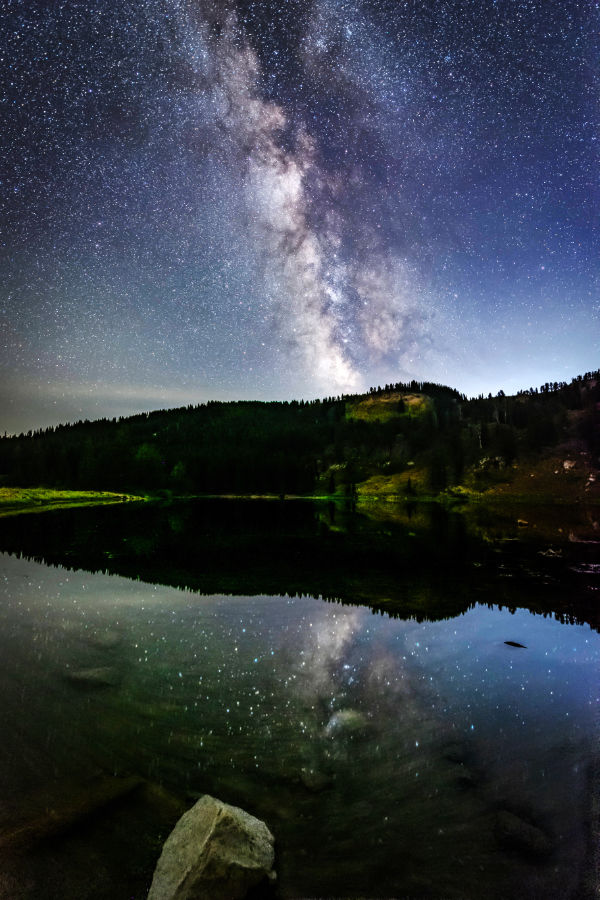
The surrounding peaks, wildflower meadows and reflective waters make it a great spot for not only landscape photography but also for stargazing. With minimal light pollution, Tony Grove offers dark, clear skies rated around Class 2 on the Bortle dark-sky scale. On calm nights, the Milky Way mirrors in the alpine pond’s glassy surface.
There’s parking at the day-use area by the shoreline, making it easy to unload equipment. Restrooms and picnic areas are nearby with just a short walk to the campground. Campfires are allowed in designated rings, providing enough warmth to enjoy the evening without disrupting the view.
Getting There
Sorry, no records were found. Please adjust your search criteria and try again.
Sorry, unable to load the Maps API.
Location Information
Address
Tony Grove Lake
Coordinates
Additional Directions
From Logan, UT:
• Go northeast on US-89 (Logan Canyon Scenic Byway) for about 19 miles.
• Watch for the Tony Grove Road (FR 003) turnoff.
• Turn onto FR 003 and drive 7 miles up a paved, scenic road to the parking area.
From Garden City, UT:
• At the SR 30 / US-89 intersection, drive 18.4 miles south on US-89.
• Turn right at the Tony Grove recreation sign, then immediately left.
• Continue 6.8 miles to the day-use and campground area.
Parking is paved and available at the day-use loop; restrooms are onsite. Please remember the pack-in, pack-out policy and any applicable day-use fees.
From Logan, UT:
• Go northeast on US-89 (Logan Canyon Scenic Byway) for about 19 miles.
• Watch for the Tony Grove Road (FR 003) turnoff.
• Turn onto FR 003 and drive 7 miles up a paved, scenic road to the parking area.
From Garden City, UT:
• At the SR 30 / US-89 intersection, drive 18.4 miles south on US-89.
• Turn right at the Tony Grove recreation sign, then immediately left.
• Continue 6.8 miles to the day-use and campground area.
Parking is paved and available at the day-use loop; restrooms are onsite. Please remember the pack-in, pack-out policy and any applicable day-use fees.
41.8939578,-111.6437378
Location Name
Forecast
Backup Locations and Dates
If conditions prevent shooting at Tony Grove Lake, we will relocate to Bear Lake North Beach (about 42 miles from the Tony Grove or 83 miles from Logan, Utah). If both sites are unavailable, we will reschedule the event or suggest an alternative site. We usually consider a third location in case the first two spots fall through. You will receive an email and phone call if plans change. Please understand that conditions can change fast, so it’s possible that we may have to adjust the location or reschedule at the last minute. We encourage you to check your email and phone messages frequently since cell phone service may not be available as we get closer to the shooting location.
More Details
Tentative Schedule
- 3:30 to 3:50 p.m. MDT – Please arrive early so you have time to park and get settled.
- 5 p.m. MDT – We will meet before sunset to scout compositions, prepare gear, and get comfortable before dark.
- 6 p.m. MDT – The instructor will give a presentation on the Milky Way and some basic tips for enjoying it and taking photos.
- 7 p.m. MDT – We will guide you through final setup of your equipment and help you select your initial composition.
- 8 to 11 p.m. MDT – We will spend the rest of the evening shooting photos, trying different settings, experimenting with different approaches and having fun. The Milky Way may still be visible after 1 a.m., so anyone who wants can keep shooting.
What You'll Need
- A DSLR or mirrorless camera with manual mode or an iPhone 13 or newer, Google Pixel 6 or newer, Samsung Galaxy S20 or newer
- A sturdy tripod
- For DSLR/Mirorrless users, a wide-angle lens (ideally 14–24mm, f/2.8 or faster, but bring what you have and we'll work with it)
- A headlamp with dimmable white light
- Extra batteries, memory cards, warm clothes, snacks, water
We will send you a full list of items you will need or might want after you enroll. We may have limited gear available for rent or we can refer you to a reliable vendor.
What's Included
- Small groups for more personalized instruction
- An instructor-guided experience
- Checklists and safety information
- Access to exclusive online night photography tips and content
- Membership in the course group
- Online post-processing tutorials
- 20% discount on a future Uncharted virtual or in person workshop
What's Not Included
- Airfare/transportation to the shooting venue
- Lodging (We will email you ideas)
- Meals
- Health/Travel Insurance
- Equipment (we may have some available for rent)
- Any other item or service not mentioned in the included section
Cancellations/Refunds
We will do our best to make sure the workshop happens as scheduled, but we may have to make changes for bad weather, unexpected hazards, delays or cancellations. If you need to cancel and we can’t fill your spot, we will give you credit for another workshop minus a cancellation fee of $30.
Waiver of Responsibility
Everyone who enrolls in the workshop must sign a waiver of responsibility before participating. We will send you the form so you can print and sign it beforehand. We will have extra copies at the shooting venue. We aren’t responsible for stolen items, injuries, sickness, death or any damages to your equipment or losses from travel expenses. To participate, you must follow all local laws and regulations or we will ask you to leave the workshop without a refund.
Book Now!
Book and Appointment and we'll contact you to schedule a workshop-
Small groups for more personalized instruction (limited enrollment)
-
Checklists and safety information
-
Online post-processing tutorials
-
Membership in the course group
-
Access to exclusive night photography tips and content
-
20% discount on a future Uncharted virtual or in-person workshop
FAQ
What experience level is required for this workshop?
None! This workshop is designed specifically for beginners who want to take their first Milky Way photo. If you’ve never used manual mode or shot at night, you’re in the right place.
Where exactly is the workshop located?
The workshop will be at Tony Grove Lake, located about seven miles off U.S. Highway 89 in Logan Canyon near mile marker 391, about 47 miles from Logan, Utah.
What are the dates and times?
We try to keep this page updated with the locations, dates and times for the next two workshops. Outside of those dates and locations, we can schedule a workshop when and where it works best for you. If you request a specific date or spot, we would first check the lunar calendar and the position of the Milky Way and other celestial objects to make sure you will be able to see them. Once we get enough people enrolled, we will work with the group to find a date and time that works best for everyone. For previous workshops, we’ve found that arriving at the shooting site earlier in the day gives us enough time to get set up and cover basic instruction while it’s still daylight. The exact schedule will be based on the position of the Milky Way at the location and time that ultimately gets selected, but to give you an idea, for past sessions the workshop ran from 5:45 p.m. to 1:00 a.m. for an event held in May. This window can go earlier or later depending on the time of year.
What if the weather is bad?
If weather prevents us from holding the workshop at Tony Grove Lake, we will relocate to Bear Lake North Beach. If both locations are unsuitable, we will reschedule. Sometimes, we’re able to consider a third location as a backup. You’ll be notified by email and phone if any changes occur.
Is there hiking involved?
There may be a little hiking required.
Are bathrooms available?
Yes, restrooms are nearby with just a short walk to the campground.
Can I camp overnight?
While we will be near campsites, this time of year in Northern Utah and Idaho can be extremely cold. If you decide to camp, make sure you are prepared for these conditions.
What kind of lighting is allowed?
Only white-light headlamps are allowed for safety. Please avoid red lights or flashlights that may disrupt others’ shots.
What kind of camera gear do I need?
A DSLR or mirrorless camera with manual settings, a wide-angle lens (preferably f/2.8 or faster), or an iPhone 13 or newer, Google Pixel 6 or newer, Samsung Galaxy S20 or newer; a sturdy tripod, and an intervalometer or cable release. A full list is provided in the welcome packet.
Will I get help with settings and setup?
Absolutely. We’ll go step-by-step through camera settings, composition, and focusing. You’ll be supported throughout the entire session.
When is the Milky Way core visible?
The galactic core begins to rise around 12:30 a.m. MDT and is best viewed from 1:00 to 3:30 a.m. before the sky brightens.
Can I ask specific questions during the session?
Yes, and we encourage it! There’s time set aside for Q&A, and the instructor is available throughout the workshop for individual help.